
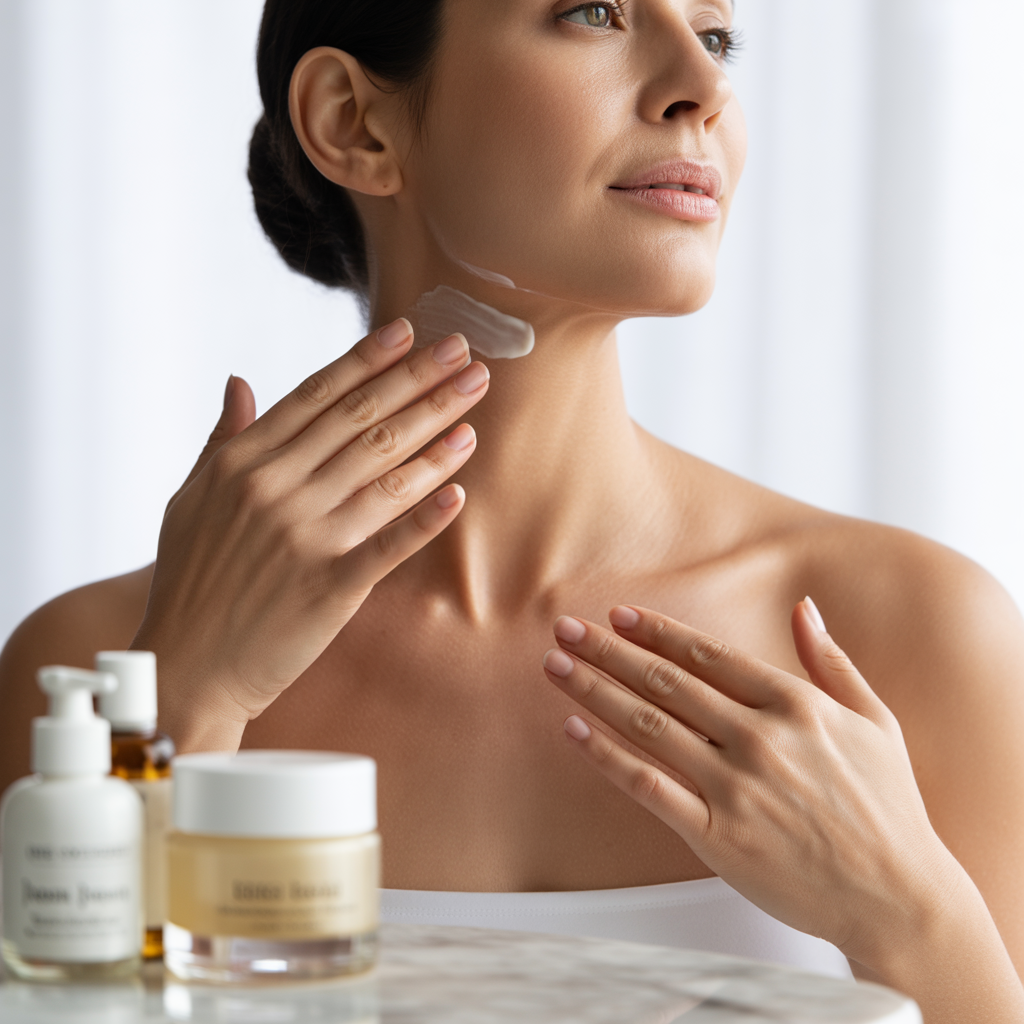
If you’re investing time, energy, and money in taking care of your face but stop at the jawline, you’re leaving out two of the most delicate and expressive areas: the neck and décolleté skin.
These areas are often neglected in daily skincare routines. Yet, they’re just as vulnerable and sometimes more so to dryness, sun exposure, gravity, friction, and lifestyle habits. Over time, you might notice changes in texture or tone, and sometimes there is a difference in how the skin on your neck and décolleté looks compared to your face.
In this guide, you’ll learn why these areas matter, the unique challenges they face, and a detailed plan to keep them smooth, hydrated, maintained, and refreshed with just a few smart habits.
What Makes the Skin on the Neck and Décolletage So Sensitive?
To care for this lower region properly, you must understand why its anatomical structure is vastly different from your face.
When analyzing your neck and décolleté skin, you have to realize that this fragile zone is significantly thinner, contains far fewer sebaceous oil glands, and lacks a dense underlying bone matrix to hold it taut.
Thin Skin Structure
The skin on your neck and upper chest is thinner and more fragile. It contains fewer oil glands, which means it dries out easily and doesn’t have the same natural protection your facial skin does.
Constant Movement
Your neck is constantly moving. Every time you tilt your head, stretch, or check your phone, you’re creating motion in the skin and may contribute to the formation of lines and folds over time.
Gravity
Unlike the skin on your face, which is supported by bone structure, the skin on your neck and chest sits on softer muscle and tissue. This makes it more susceptible to changes over time.
Sun Exposure
Think about how often these areas are exposed, especially when wearing open shirts, tank tops, or dresses. Unfortunately, these areas are often left without SPF, which sun exposure may contribute to dryness or uneven tone over time.
Avoid the ”Jawline Gap”
Most people stop their skincare routine at the jawline. That means no cleanser, no serum, no moisturizer, and most importantly, no sunscreen. Over the years, this neglect shows.
Daily Care Routine: Step-by-Step

You can easily transform your neck and décolleté skin using the gentle, high-quality botanical products you already own, as long as you apply them with specific, consistent upward movements.
Rebuilding thin, paper-like skin textures doesn’t mean you need to run out and purchase twenty specialized luxury formulas.
1. Cleanse Gently from Chest to Chin
In the morning and evening, use a gentle, hydrating cleanser that you already use on your face. Avoid bar soaps or harsh body washes. The goal is to remove oil, sweat, and residue without stripping the skin.
Massage in upward circular motions from your chest up to your jawline. Rinse with lukewarm water and gently pat dry with a soft towel.
2. Apply a Hydrating Toner (Optional)
If your skin tends to feel tight after cleansing, applying a toner or essence can help. Look for one with calming and hydrating ingredients like rose water, glycerin, or aloe vera.
3. Choose Serums with Active Ingredients
This is an important step. A good serum delivers concentrated ingredients that help to improve absorption. Choose a serum that addresses your specific skin goals:
- Vitamin C: Commonly used for brightening and fighting environmental stressors
- Peptides: Used to help enhance skin elasticity and resilience
- Niacinamide: Helps promote a more visibly even texture and tone
- Hyaluronic acid: Known for providing hydration
- Plant-based ingredients: Often included to nourish and visibly soften skin texture
Apply a few drops and press gently into the skin; do not rub harshly.
4. Moisturize Generously
Hydration is key to plump, resilient skin. Use a moisturizer rich in ingredients like ceramides, shea butter, squalane, or hyaluronic acid.
Don’t be shy, apply from your collarbone to your jawline using upward strokes to support skin’s natural contours and circulation.
If you’re doing this at night, feel free to use a thicker night cream or balm for deeper nourishment.
5. Protect With Sunscreen Every Morning
This step is particularly important. The neck and chest receive tons of sun exposure and are often forgotten when applying SPF.
Look for formulas labeled as “face + body” or designed for delicate areas such as the neck. Lightweight gel sunscreens or moisturizers with built-in SPF can work well.
Remember to reapply every two hours if you’re spending time outside or even indoors near windows.
Lifestyle Habits That Affect Your Neck and Décolleté Skin
Your repetitive daily mechanical positions play a massive role in how fast vertical lines etch themselves permanently into your chest tissue.
Gaining control over your neck and décolleté skin health involves addressing lifestyle factors, such as your sleep alignment, your daily workspace posture, and even where you apply perfume.
Sleep Position
Sleeping on your side or stomach may contribute to creases that can become more prominent over time. Try sleeping on your back and using a soft pillow. Some brands even offer specialty sleepwear designed for skin comfort or pillows designed to help minimize chest creasing.
Posture
Hunching over phones and screens puts strain on the neck. Try holding your devices at eye level, and stretch your neck throughout the day to release tension.
Fabric and Friction
Rough fabrics, heavy jewelry, and tight collars can irritate the skin over time. Choose soft, breathable fabrics, especially at night.
Perfume Placement
Perfume with alcohol and some fragrances may contribute to irritation or uneven pigmentation for sensitive skin. Instead, spray perfume on your clothes or on areas away from the sensitive front neck.
Mistakes That Can Hold You Back
- Forgetting sunscreen on the chest
- Using body lotion instead of facial-quality products
- Applying ingredients too aggressively
- Ignoring posture and screen time habits
- Skipping nighttime skincare on the neck
Small habits compound over time. What feels like a tiny step today becomes a huge difference in five years.
Massage and Tools
You don’t need expensive gadgets to benefit from massage. Using your fingertips or a simple jade roller can boost circulation, release tension, and help improve the appearance of your skin.
Use a few drops of facial oil or serum for slip, and always massage upward.
If using a gua sha tool, follow the contours of your neck with light pressure, moving from the center outward and upward.
The Key Point
Your skincare routine shouldn’t stop at your chin. Learning how to take care of your neck and décolleté skin is essential for maintaining cared-for, even-toned, and healthy-looking skin. With simple daily steps: cleansing, moisturizing, protecting, and caring for the area with consistency, you can help keep your neck and décolleté skin looking cared for.
You don’t need a drawer full of luxury products. What truly matters is how consistently and thoughtfully you care for your skin, every inch of it.
Frequently Asked Questions About Neck and Décolleté Skin
Is it safe to spray my favorite alcoholic perfumes directly onto my neck and chest?
No. Many perfumes contain high concentrations of alcohol that dry out thin skin and cause irritation. When exposed to the sun, these ingredients can trigger a chemical reaction leading to permanent discoloration and patchy pigmentation on your neck and décolleté skin.
What are the best skincare ingredients to smooth out a crinkly chest texture?
Look for moisture-binding humectants combined with heavy barrier repair agents. Ingredients like hyaluronic acid and glycerin can plump up fine lines, while ceramides, squalane, and shea butter reinforce the delicate matrix of your neck and décolleté skin.
Can side sleeping really cause permanent deep wrinkles on my upper chest?
Yes. Sleeping on your side forces your shoulders forward, compressing the delicate skin into deep folds for hours at a time. Over years, this repetitive mechanical pressure breaks down collagen in your neck and décolleté skin, leading to permanent vertical lines.
Why does my neck and décolleté skin look wrinkled much faster than my face?
his specific zone features very thin skin with significantly fewer oil glands than your face, making it naturally prone to severe dehydration. Additionally, it lacks thick underlying muscle and bone support, making it highly vulnerable to gravity and sun damage.
Disclaimer: This article is for informational and educational purposes only and is not a substitute for professional skincare or medical advice.