
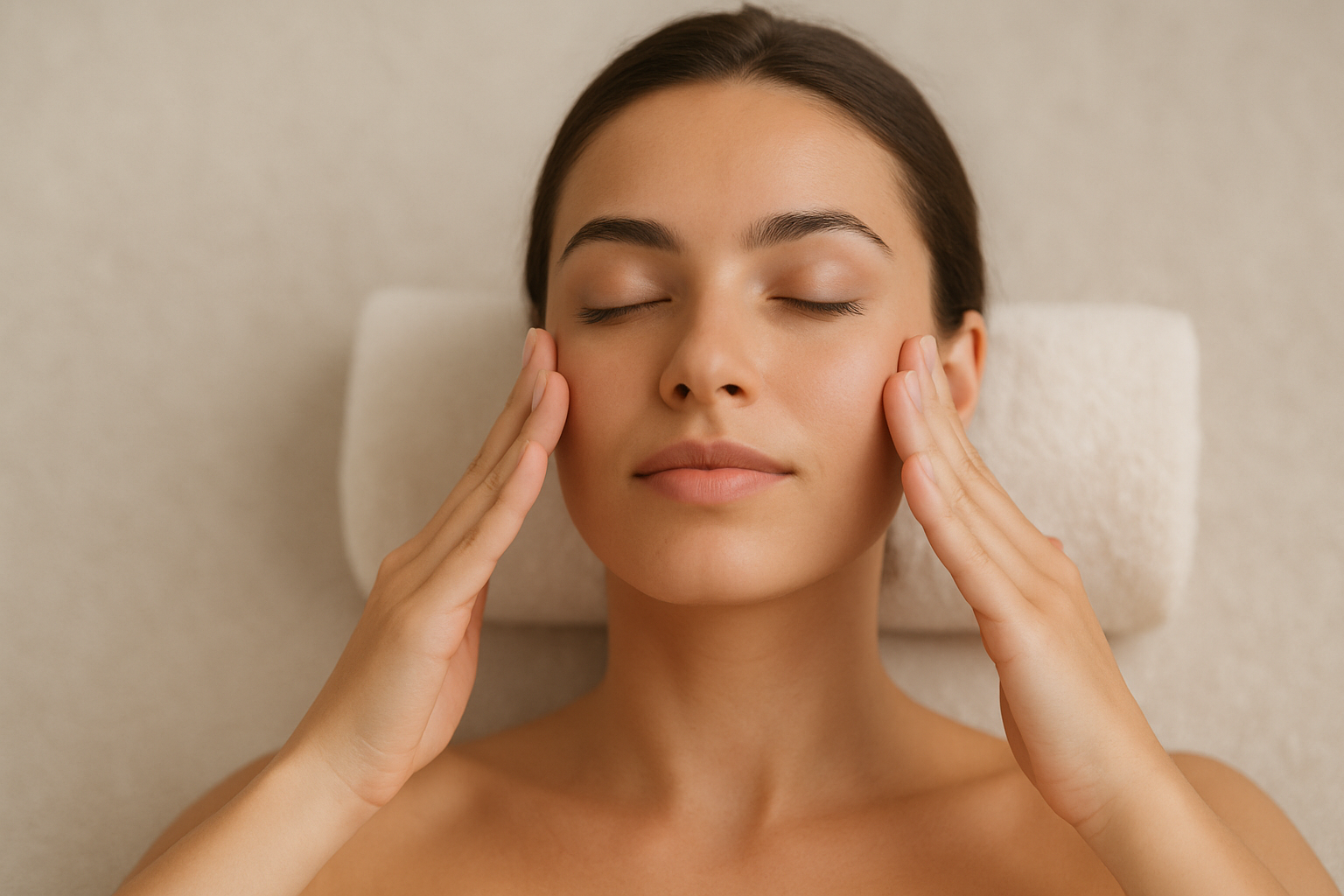
Incorporating simple facial massage techniques into your morning routine acts like an immediate, zero-cost physical reset, reviving sluggish lymphatic drainage and bringing back your natural brightness. It is enjoyed for its soothing qualities and its effects on the skin layers, as it boosts circulation, supports product absorption, helps reduce the appearance of puffiness, and promotes facial muscle relaxation.
In this comprehensive guide, you’ll learn how facial massage works, the best tools and techniques, how to build your own routine, and how to adapt it to your skin’s needs and lifestyle.
Top Benefits You Should Know
Understanding the principles behind facial massage techniques helps explain why it’s so effective. The benefits happen on both the surface level, improving skin tone, glow, and the deeper levels of muscle and lymph flow.
- Encourages circulation and promotes a refreshed look
- Reduces puffiness and fluid retention
- Enhances fluid movement
- Supports skin elasticity and firmness
- Helps define facial features
- Releases tension in facial muscles
- Boosts absorption of serums and moisturizers
- Improves skin texture and overall radiance
- Promotes relaxation and stress relief
When done regularly, facial massage becomes a powerful complement to your routine and a relaxing, mindful practice for your mental well-being.
My Journey with Facial Massage Techniques
For a long time, I used to wake up with noticeable puffiness, especially around my eyes and jawline. I used to think it was just how my face ‘was’ in the morning, but once I started incorporating even just five minutes of gentle massage during my morning routine, everything changed.
Not only did my face look more ‘awake’ and defined, but I realized how much tension I was holding in my jaw from daily stress. That tension started to melt away with consistent practice. Now, it’s the one part of my routine I refuse to skip, it’s like a reset button for both my skin and my mind. You don’t need to spend an hour on it; even those few minutes while applying your serum can make a world of difference in how you feel when you look in the mirror.
Tools You Can Use
You don’t need tools to massage your face effectively, but many people enjoy them for comfort or extra results. Choose based on your routine and preference.
Selecting the right physical tool helps you get the most out of your facial massage techniques, whether you prefer a jade Gua Sha, a cooling roller, or simply your own knuckles.
Hands
The most natural and intuitive option. Your fingertips and knuckles can adapt to any area of your face. Plus, you feel exactly how much pressure you’re applying.
Gua Sha
A flat, smooth-edged tool (often made of jade or quartz) used in sweeping motions to sculpt, lift, and encourage circulation. It requires some practice, but many people enjoy using for their routine.
Jade Roller
This tool has two rolling stones, one for larger areas (forehead, cheeks) and one for smaller areas (under the eyes). It’s great for cooling, relaxing, and de-puffing.
Facial Cups
Used to create light suction on the skin, improving blood flow. Always use with oil and keep pressure minimal to avoid bruising.
Massage Wands or Vibration Tools
These electronic or manual tools help stimulate muscles and encourage firmness. Some offer heat or microcurrent features.
Choose one or two tools that fit your comfort level. Even using just your fingers consistently can provide satisfying results.
How to do a Facial Massage for Glowing Skin?
Every distinct zone of your face features a unique muscular blueprint and requires specific directional strokes to drain fluid successfully.
Follow this targeted regional guide to execute your facial massage techniques safely, ensuring you always work from the center of your face outward to follow your body’s natural lymphatic pathways. Here’s how to care for each area:
Forehead
Use upward strokes from the center out toward the temples to smooth horizontal lines. Gently knead with your knuckles to release tension. This helps with frown lines and improves circulation.
Eye Area
Use your ring finger (which applies the least pressure) to sweep gently from the inner to outer corners of the eye. Pat lightly under the eyes and avoid pulling the skin. Cold rollers or metal tools are helpful here.
Cheeks
Glide from the sides of your nose toward the ears in upward arcs. This helps drain lymph fluid and define the cheekbones. Use light pressure and don’t stretch the skin.
Jawline
Glide from the chin along the jaw toward the earlobes. Use knuckles or your fingertips to apply gentle pressure. This helps define the jaw and release jaw tension.
Neck
Always massage upward along the front of the neck, from the collarbone to the jaw. On the sides of the neck, you can use downward strokes to assist lymphatic flow. Avoid the throat itself, it’s sensitive.
When and How Often to Massage
The technique can be done daily, even twice a day, for 3 to 10 minutes, depending on your routine.
Morning massage helps reduce puffiness, awaken the skin, and energize your features. Use cooling tools or light oils.
The evening ritual supports relaxation, product absorption, and deeper circulation. Use richer oils or creams and slower, deeper strokes.
If you’re short on time, even 1–2 minutes while applying moisturizer can make a difference over the long term.
Sample Routines
Morning (5 minutes)
- Cleanse and apply serum or light oil
- Use hands or a jade roller to sweep from the center of the face outward
- Focus under the eyes and along the jawline
- Finish with a few upward motions on the neck
- Apply sunscreen
Evening (10 minutes)
- Cleanse and apply facial oil
- Use gua sha or fingers to lift cheeks and forehead
- Use circular motions on the temples and between brows
- Glide under the jawline and down the sides of the neck
- Finish with tapping motions to stimulate blood flow
Best Oils and Serums
Never manipulate your facial tissue on completely dry skin, as the resulting friction can tug on delicate fibers and compromise your skin barrier.
To safely execute these facial massage techniques, you must apply a high-slip vehicle like non-comedogenic squalane, jojoba, or rosehip oil to ensure your fingers glide seamlessly.
Squalane
Light, fast-absorbing, suitable for all skin types
Jojoba Oil
Mimics skin’s natural sebum, great for oily or acne-prone skin
Rosehip Oil
Rich in antioxidants and vitamins A and C
Argan Oil
Ideal for mature or dry skin
Facial Serums
Use those with hyaluronic acid, peptides, or niacinamide to combine
Avoid mineral oil or anything with a strong fragrance if you have sensitive skin.
Tailoring to Your Skin Type
For Oily or Acne-Prone Skin
Use non-comedogenic oils and a light touch. Avoid areas with active acne. Clean your tools before and after every use.
For Dry or Mature Skin
Use richer oils and deeper pressure. Focus on lifting and relaxing movements. Massage daily to support skin’s natural renewal and support skin’s elasticity.
For Sensitive Skin
Keep sessions short (2–3 minutes). Use calming oils and avoid harsh tools. Monitor how your skin reacts.
Mistakes to Avoid
- Using too much pressure, which can cause broken capillaries
- Massaging over irritated, broken, or inflamed skin
- Skipping the neck and jaw
- Not using enough lubrication
- Using unclean tools, which can spread bacteria
- Rushing the massage — slowness enhances benefits
Types of Facial Massage Techniques
Examples often mentioned include:
- Kobido: a traditional Japanese facial massage technique
- Buccal massage: a facial massage method performed by trained professionals
- Face yoga: guided facial movements often discussed in wellness routines
- Myofascial techniques: approaches sometimes referenced in facial relaxation practices
These practices are often mentioned alongside home routines in wellness discussions.
The Emotional and Mental Side
Facial massage is more than skincare. It’s a chance to connect with your body, practice mindfulness, and release tension at the end of the day.
It lowers cortisol levels, supports nervous system balance, and adds a peaceful, ritualistic moment to your routine. The glow you see is not just from blood flow, it’s from the harmony between your inner and outer self.
Final Thoughts
Practicing facial massage techniques to improve skin circulation and tone is one of the most rewarding and low-effort ways to care for your skin and yourself. With just a few minutes a day, the benefits go far beyond beauty; they support your skin’s health and your well-being.
You don’t need fancy tools or long sessions, just your hands, a few minutes a day, and the willingness to touch your skin with kindness and purpose. Over time, you’ll notice changes in how you feel when you look in the mirror. Consistency brings the glow. Now it’s in your hands!
Frequently Asked Questions About Facial Massage Techniques
Should I avoid facial massage techniques if I have active inflammatory acne?
Yes. Massaging directly over inflamed acne blemishes, open wounds, or active skin irritations can spread bacteria across your face and worsen redness. If you have a breakout, safely apply your facial massage techniques only to the unblemished areas, like your jawline and neck.
How do I properly perform lymphatic drainage strokes on my neck area?
The neck requires dual directions. To release tight muscles and lift, use upward strokes along the front of your neck. To drain fluid and clear puffiness from your face, use gentle, light downward strokes along the sides of your neck toward your collarbones.
What is the main difference between using a Gua Sha and a Jade Roller?
A Jade Roller is primarily designed for gentle cooling, surface product absorption, and quick morning de-puffing. Gua Sha facial massage techniques, however, utilize distinct anatomical edges designed for deeper myofcial release, muscle sculpting, and intense lymphatic drainage.
Can doing facial massage techniques at home cause sagging skin if done incorrectly?
No, provided you always use a rich facial oil or serum to eliminate skin friction. To avoid stretching the tissue layers, always follow upward and outward directional movements, never pull straight downward, and avoid applying excessive vertical pressure that could bruise cells.
Disclaimer: This article is for informational and educational purposes only. It does not provide medical advice or replace professional skincare consultations.