

Learning how to choose the best sunscreen for your skin type is the most important skill you can develop for a healthy, long-term skincare routine. Sunscreen is the foundation of any good skincare routine. It protects your skin from sunburn and helps with visible signs of aging and dark spots. But despite its importance, many people either skip it or use the wrong kind.
In this guide, you’ll learn exactly how to choose the best sunscreen for your skin type, how to apply it properly, how to read the label like a pro, and how to make it a daily habit that sticks, so you never skip this essential step again.
Why Sunscreen Is Essential for Skin Appearance
Daily sun exposure adds up. Even though some sunlight is beneficial for vitamin D, consistent exposure without protection can lead to visible changes in your photoaging and premature signs of aging over time.
Here’s What UV Radiation Can Do
- Accelerates visible signs of aging: such as fine lines, wrinkles, and loss of firmness.
- Causes sunburn: the most immediate and visible sign of overexposure.
- Can lead to hyperpigmentation: contributing to dark spots and uneven skin tone, especially in deeper skin tones.
- Damages skin’s supportive structures: over time, leading to a loss of elasticity and sagging.
- Highlights the need for daily defense: This is why broad-spectrum sunscreen is considered an essential step for long-term skin comfort and appearance.
Daily Exposure Is Enough to Cause Skin Damage
You don’t need to be at the beach for UV rays to harm your skin. You’re exposed every time you:
- Walk outside
- Sit near a window
- Drive your car
- Sit under certain indoor lighting
Even cloudy days aren’t safe; up to 80% of UV rays still penetrate clouds.
How do I Know What Type of Sunscreen I Need?
Learning how to choose the best sunscreen for my skin type completely changed my perspective on skincare!
For years, I only wore sunscreen when I was going to the pool or the beach. I thought that because I spent most of my day inside an office, my skin was safe. It was only when I noticed that the skin on the side of my face near my car window started looking more uneven than the other side that I realized UV rays are everywhere.
I had to try at least five different formulas before I found one that didn’t feel heavy or greasy under my makeup. Now, applying my broad spectrum SPF is just as automatic as brushing my teeth. It is the one step in my routine that makes me feel like I am truly taking care of my future skin.
Understanding the Difference: Chemical vs Mineral Formulas
One of the first decisions to make when choosing a sunscreen is whether to go with a chemical or mineral (physical) formula.
When deciding how to choose the best sunscreen for your skin type , the first crossroad you’ll hit is picking between a chemical or a mineral formula. Let’s break down the difference.
Chemical Sunscreens
Chemical sunscreens work by absorbing UV rays and helping reduce their impact on the skin, which is then released from the skin.
Key chemical filters include:
- Avobenzone
- Octinoxate
- Octocrylene
- Oxybenzone (now avoided in some formulas due to concerns over irritation and reef safety)
Pros:
- Lightweight and often invisible on the skin
- Easier to apply under makeup
- More resistant to sweat and water
- Often better for deeper skin tones because they leave no white cast
Cons:
- May sting sensitive skin or eyes
- May not be suitable for all skin types
- Must be applied 15–20 minutes before sun exposure
Mineral (Physical) Sunscreens
Mineral sunscreens use natural minerals like zinc oxide and titanium dioxide to reflect and scatter UV rays.
Pros:
- Mineral sunscreens begin providing protection as soon as they are applied after application
- Gentle and suitable for sensitive or reactive skin
- Less likely to cause irritation or burning
- Naturally broad-spectrum
Cons:
- Can leave a white cast, especially on darker skin tones
- Thicker texture, which some users find heavy
- Often rubs off more easily, especially during sweating
In short:
- Choose a chemical if you want something lightweight and invisible
- Choose a mineral if you have sensitive, reactive, or skin prone to breakouts
How to Choose Sunscreen Based on Skin Type?
The secret of how to choose the best sunscreen for your skin type lies in understanding your skin’s unique needs, whether it’s oil control or deep hydration.
Now that you understand the types of sunscreens, let’s talk about how to find the perfect match for your skin.
Oily Skin
If your skin is shiny within hours of washing and feels greasy, you need a formula that controls oil without clogging pores. If you have a greasy T-zone, knowing how to choose the best sunscreen for your skin type means looking for oil-free, mattifying gel textures.
Look for:
- Gel or water-based textures
- Oil-free formulas that won’t feel heavy
- Mattifying finishes
- Silica or rice starch (for oil absorption)
Avoid:
- Heavy creams
- Occlusive ingredients like coconut oil or lanolin
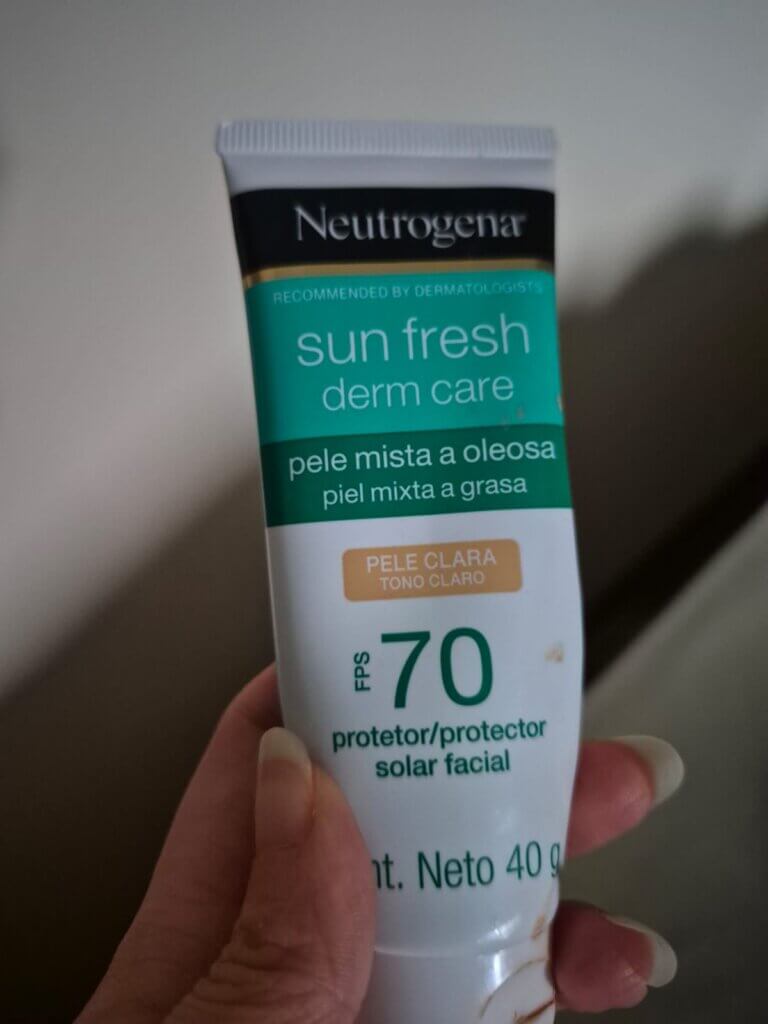
Powder sunscreens or setting sprays with SPF are great for midday reapplication without disrupting your makeup. By the way, the Neutrogena one I use is also a great option.
Dry Skin
For those with flakiness, how to choose the best sunscreen for your skin type involves finding creamier formulas packed with hyaluronic acid and ceramides. Dry skin feels tight, flakes, or looks dull without moisturizing. Choose a sunscreen that hydrates while protecting.
Look for:
- Cream or lotion formulas
- Added ingredients like hyaluronic acid, glycerin, ceramides, or squalane
- Formulas labeled “moisturizing” or “hydrating”
Avoid:
- Alcohol-based formulas
- Lightweight gels without added hydrants
Layer sunscreen over your regular moisturizer for added protection.
Combination Skin
With combination skin, you’ll often have an oily T-zone and drier cheeks. Learning how to choose the best sunscreen for your skin type is essential to balance.
Look for:
- Lightweight lotions or emulsions
- Non-greasy textures
- “Balanced” formulas made for combo skin
Use two different sunscreens, a mattifying one for your T-zone and a hydrating one for the rest of your face. I have combination skin, and if you decide to follow my sunscreen recommendation, you won’t regret it!
Sensitive Skin
People with easily reactive skin often find that certain products can feel irritating to new products, fragrance, or environmental stressors.
Sunscreen can help or hurt, depending on your choice. If your skin reacts to everything, how to choose the best sunscreen for your skin type becomes about finding fragrance-free, mineral-only options
Look for:
- Mineral formulas with zinc oxide or titanium dioxide
- Fragrance-free, alcohol-free labels
- Hypoallergenic products
- Simple, short ingredient lists
Avoid:
- Chemical filters like oxybenzone or avobenzone
- Essential oils
- Fragrance, even if “natural”
Tip: Do a patch test before applying to your full face.
Skin Prone to Breakouts
Sunscreen can be tricky if you have breakouts easily, but skipping it is not the solution.
Look for:
- oil-free formulas
- Lightweight, breathable textures
- Ingredients like niacinamide or green tea (which help calm the skin)
Avoid:
- Occlusive agents (like beeswax, mineral oil, coconut oil)
- Heavy creams
Tip: Always double cleanse at night to remove sunscreen buildup.
What to Look For on a Sunscreen Label
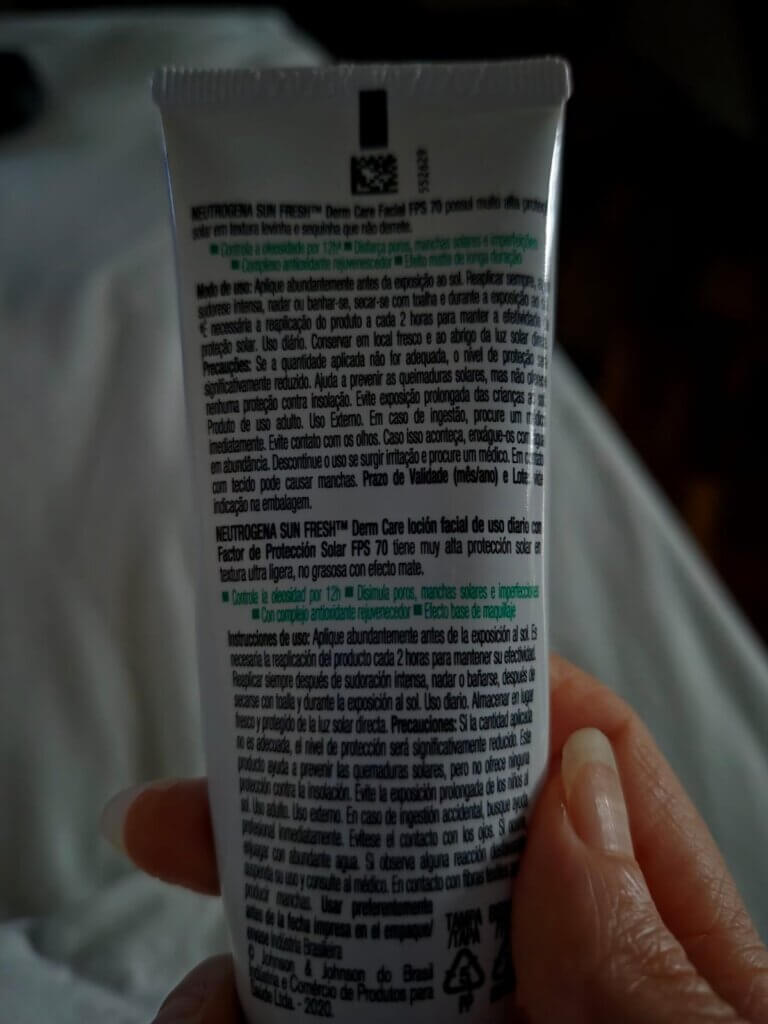
You can’t master how to choose the best sunscreen for your skin type without learning to decode terms like ‘Broad-Spectrum’ and ‘PA+’ on the packaging. Navigating a product label can be confusing.
Here’s how to read between the lines:
1. Broad-Spectrum
This means the product protects from both UVA and UVB rays.
- UVA: Visible aging, wrinkles, sagging
- UVB: Sunburn, redness, sun impacts
2. SPF (Sun Protection Factor)
- SPF 15: Helps block about 93% of UVB rays ou “SPF 15: Blocks approximately 93% of UVB rays.
- SPF 30: Blocks ~97%
- SPF 50: Blocks ~98%
Note: No sunscreen blocks 100% of UVB rays. Anything over SPF 50 has minimal added benefit but can be more irritating for sensitive skin.
3. Water Resistance
Look for:
- Water-resistant (40 minutes)
- Water-resistant (80 minutes)
This doesn’t mean waterproof. You still need to reapply after sweating or swimming.
4. Lightweight
This means it’s less likely to clog your pores. Especially important for oily and skin prone to blemishes.
5. Active Ingredients
Check if the sunscreen uses mineral filters (zinc oxide, titanium dioxide) or chemical filters (avobenzone, octocrylene, etc.) based on your skin’s tolerance.
How to Apply Sunscreen Correctly
Knowing how to choose the best sunscreen is a powerful tool. Even the best sunscreen won’t work if it’s not applied properly.
How Much to Use
- Face: Two fingers’ length or a nickel-sized amount
- Body: About a shot glass full (30 ml) for full body coverage
When to Apply
- Apply 15–30 minutes before sun exposure (especially chemical formulas)
- Reapply every 2 hours, or immediately after swimming or sweating
- Don’t forget: ears, neck, hairline, eyelids, lips, and tops of feet
With Makeup
- Use a dedicated sunscreen before your foundation
- For touch-ups, use: SPF cushion compacts, SPF setting sprays, or setting powders with SPF.
Common Sunscreen Mistakes and How to Avoid Them
Mistake 1: Only Applying Once in the Morning
Fix: Reapply every 2 hours during sun exposure.
Mistake 2: Skipping It on Cloudy Days
Fix: UV rays penetrate clouds; make sunscreen a daily habit.
Mistake 3: Not Using Enough
Fix: Apply more than you think you need, especially on your face and neck.
Mistake 4: Relying on SPF in Makeup
Fix: Use a dedicated SPF underneath makeup. Most people don’t apply enough foundation to get full SPF coverage.
Mistake 5: Forgetting “Hidden” Areas
Fix: Always apply sunscreen to:
- Ears
- Eyelids
- Around the mouth
- Back of the neck
- Hands
Choosing Sunscreen for Your Lifestyle
It’s not just your skin type; your daily habits also matter.
Finally, how to choose the best sunscreen for your skin type also depends on your daily habits, such as being an outdoor athlete or an office worker.
For Active or Outdoor Lifestyles
- Many people who are active outdoors prefer water-resistant formulas
- Go for sprays or sticks for quick reapplication
- Some people find that certain formulas feel uncomfortable when sweating
For Office or Indoor Life
- Lightweight lotion formulas work well
- Still choose broad-spectrum protection (UVA rays pass through windows)
For Frequent Travelers
- Stick sunscreens are great for carry-on
- Powder SPFs are ideal for mid-day touchups
For Makeup Users
- Choose sunscreens that act like a primer
- Try tinted mineral sunscreens for light coverage
- Use SPF sprays or compacts for reapplication
How to Build a Daily Sunscreen Habit
Consistency is everything. Here’s how to make sunscreen non-negotiable in your routine:
- Keep it near your toothbrush or skincare shelf
- Apply it as the last step of your morning skincare
- Choose a texture you love (gel, cream, milk, spray)
- Carry a travel-size SPF in your bag or car
- Use visual reminders (notes on mirror or phone alarms)
- Try different finishes (matte, dewy, tinted) to find what fits your style
Final Thoughts: Building a Consistent Daily Habit
Learn how to choose the best sunscreen for your skin type it’s one of the most powerful skincare tools for long-term protection and maintaining your skin’s appearance. No matter your skin type: oily, dry, or sensitive, you can find a formula that suits your needs.
So, don’t overthink it. Pick the sunscreen that fits your lifestyle, apply it generously, and stay consistent. Your skin can thank you: today, and for years to come.
Frequently Asked Questions About Sunscreen
How do I reapply sunscreen over my makeup?
Reapplication is easy with the right tools. You can use an SPF setting spray, a mineral powder with sun protection, or a cushion compact. These options allow you to refresh your defense every two hours without disturbing your foundation or concealer.
Is SPF 50 much better than SPF 30?
The difference is smaller than you might think. SPF 30 blocks about 97 percent of UVB rays while SPF 50 blocks about 98 percent. The most important factor is not the number on the bottle but how generously and frequently you apply the product throughout the day.
Can I skip moisturizer if my sunscreen feels hydrating?
If you have oily or combination skin, a hydrating sunscreen can often replace your morning moisturizer. However, if you have very dry skin, you might still need a dedicated moisturizing layer underneath to keep your skin comfortable and prevent flakiness during the day.
Do I really need sunscreen if I work indoors?
Yes, because UVA rays can penetrate through standard window glass. These specific rays are responsible for long-term signs of aging and skin damage. Making sunscreen a daily habit even when staying inside ensures your skin remains protected from indirect exposure.
Disclaimer: This guide provides general information about sunscreen and skincare. It is not medical advice. For personal skin concerns or questions about sun protection, consult a licensed dermatologist or healthcare professional.