
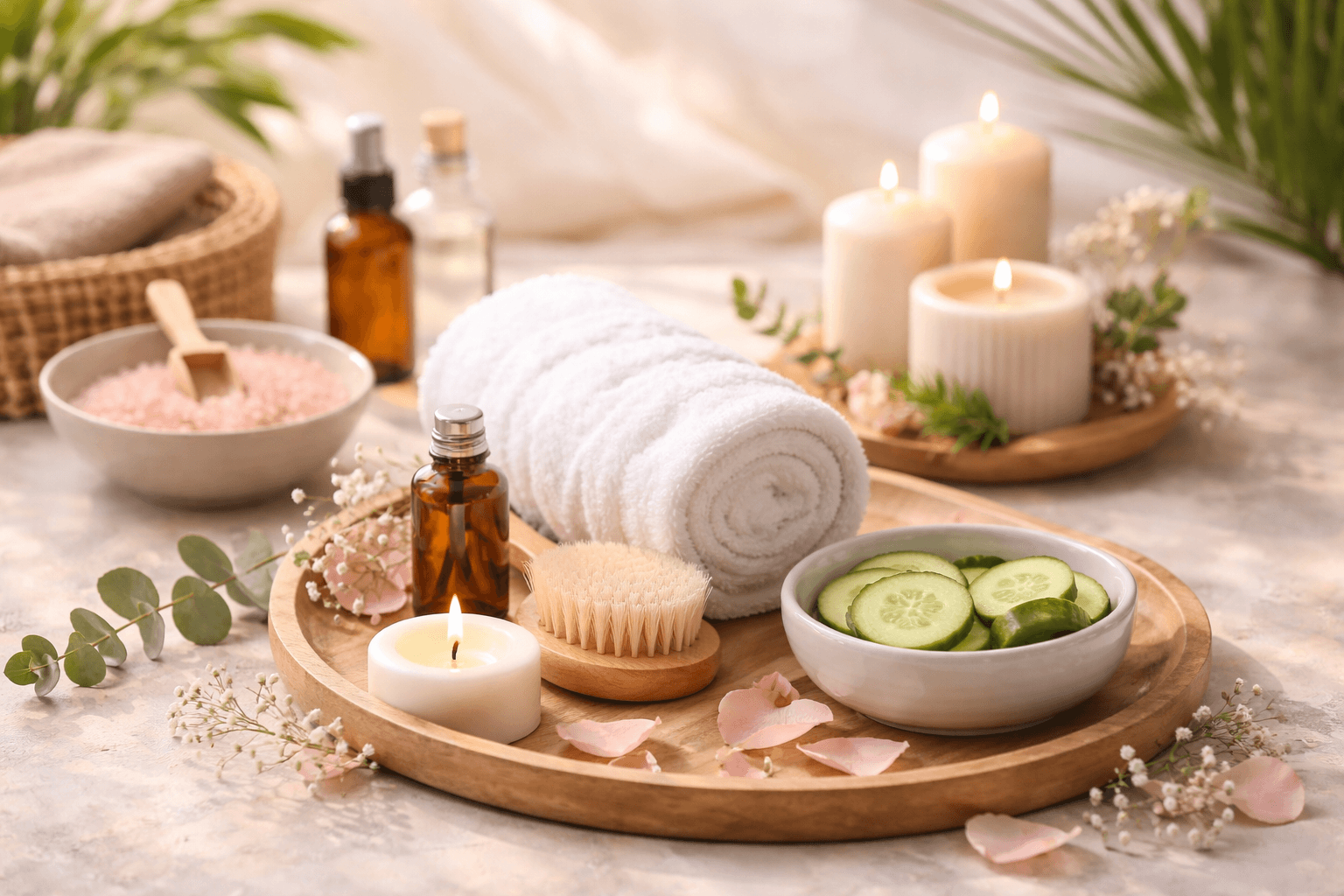
Figuring out how to create a home spa is the ultimate solution for anyone looking to melt away an exhausting workweek without burning through their monthly budget on overpriced treatments. You don’t need a professional hydrotherapy room to release deep muscle tension and revive a dull complexion; you just need a few deliberate sensory shifts.
This guide will walk you through easy and affordable ways to create your own spa-like retreat at home.
Why a Home Spa Experience Matters
Understanding how to create a home spa environment goes far beyond superficial cosmetics; it is a vital mental reset. When you purposefully slow down to target accumulated physical stress, you stop your nervous system from running on pure survival mode.
- Reduce stress and calm the mind.
- Soothe tired muscles.
- Hydrate and rejuvenate the skin.
- Reconnect with yourself through mindful self-care.
How to Create a Spa-Like Atmosphere at Home?
Your environment sets the tone for relaxation. Here’s how to create an atmosphere:
- Lighting: Dim the lights or use candles for a soft glow.
- Scents: Use essential oils, incense, or scented candles like lavender or eucalyptus.
- Sounds: Play calming music, nature sounds, or white noise.
- Clutter-free space: Tidy up the area before you begin to avoid distractions.
Aromatherapy and Mood
Your physical environment completely dictates how fast your mind can disengage from daily anxiety. A critical rule on how to create a home spa that actually triggers real relaxation is to aggressive clear out clutter, dim harsh overhead bulbs, and activate specific scent triggers.
- Lavender – Known for its calming properties, lavender helps reduce stress and promotes deeper relaxation. It’s perfect to use in the evening before bed.
- Eucalyptus – Refreshing and energizing, ideal for clearing the mind and creating a spa-like atmosphere.
- Chamomile – Gentle and soothing, great for moments when you need comfort and peace.
Tip: Adding lavender or eucalyptus oils to your diffuser completely shifts the room’s energy. This sensory stimulation is a core pillars when discovering how to create a home spa, as plant molecules travel instantly to the brain to block out racing thoughts.
The Benefits of Water Therapy (Hydrotherapy)
Traditional water rituals are deeply restorative for tight, locked muscles. When planning how to create a home spa in your bathroom, turning a basic hot shower into a dense steam capsule allows your pores to soften, releasing deeply trapped sebum and pollution.
- Bath: Add Epsom salts or a few drops of essential oils to relax muscles.
- Shower: Use a loofah or soft sponge with a soothing body wash.
- Steam: Allow the steam to refresh your skin, making your skin more receptive to moisturizers.
Exfoliate for a Natural Glow
Dead epidermal buildup leaves your limbs looking dry, chalky, and rough to the touch. To master how to create a home spa that delivers a reflective body glow, use a firm dry brush or a gritty sugar scrub to strip away those dead layers and force fresh circulation.
- A gentle body scrub, exfoliate gently using circular motions, especially on elbows, knees, and feet. Don’t overdo it; once or twice a week is enough.
- A DIY mix of sugar and honey or sugar and olive oil.
- A dry brush before bathing to stimulate circulation.
Nourish Your Face and Hair with Masks
Facial masks are the most iconic part of any beauty treatment. A pro-tip on how to create a home spa for your specific skin type is applying a thick layer of mineral clay to absorb greasy T-zone buildup, or choosing a raw honey blend to plump up parched lines.
- Moisturizing masks for dry skin.
- Clay-based masks for oily or combination skin.
- Soothing masks with aloe or cucumber for tired skin.
Apply the mask and relax for 10–15 minutes while it works.
Moisturize and Massage
Locking in hydration right after a hot steam session prevents your skin barrier from snapping and drying out. When learning how to create a home spa experience, turning your daily lotion application into a deep, circular pressure massage is mandatory to drain fluid and relax tight calves.
You can also use a roller or massage ball to ease muscle tension.
Care for Your Hands and Feet
Our extremes take the absolute worst beating throughout the week, resulting in cracked skin and sore soles. If you want to know how to create a home spa, a dedicated hot water soak followed by a rigorous pumice stone scrape will melt away dead calluses.
- Soak feet in warm water with a little salt.
- Use a pumice stone or foot scrub to smooth rough patches.
- Apply a thick cream or oil, then wear cotton socks or gloves for deep hydration.
Hair Care Rituals
A true pampering session cannot cut off at your hairline, leaving your head tight and your strands fried. Figuring out how to create a home spa for your hair structure involves releasing scalp tension with a targeted massage and layering a heavy botanical butter to reverse split ends.
With a few simple steps, you can give your hair the same level of care and relaxation as your skin.
Scalp Massage
Use your fingertips or a scalp massager to boost circulation and release tension. This not only feels relaxing but can help improve scalp circulation.
Hair Masks
Apply a nourishing mask based on your hair needs:
- For dry hair: coconut oil or shea butter masks.
- For dull hair: avocado and honey blends.
- For oily scalp: clay-based masks to balance excess oil.
Warm Towel Wrap
After applying a mask or conditioner, wrap your hair in a warm towel for 10–15 minutes. The heat supports better product absorption deeper, leaving your hair softer and shinier.
Gentle Detangling
After washing, use a wide-tooth comb or soft brush to avoid breakage and keep hair smooth.
Tip: Pair your scalp massage with lavender or rosemary essential oil for an extra calming and refreshing effect.
What are Good Items for a Spa Day at Home?
Across different cultures, home hair care rituals have long been part of moments of relaxation and self-care.
Rather than focusing on complex routines, many of these practices highlight simple ingredients and gentle habits that encourage mindfulness and consistency.
- Ingredients such as avocado, honey, yogurt, coconut oil, banana, olive oil, aloe vera, and rice-based products are often mentioned in traditional beauty conversations. They are commonly associated with nourishment, softness, and comfort, especially when hair feels dry, dull, or stressed by daily routines.
- Some people include these ingredients in their routines because they enjoy the sensory experience: the textures, natural scents, and the feeling of dedicating time to themselves. Others are drawn to the simplicity of using familiar, accessible items as part of a wellness-focused lifestyle.
- When exploring home hair care rituals, it’s important to listen to your hair and be mindful of how your scalp and strands respond. What feels nourishing for one person may feel different for another, which is why gentle experimentation and awareness matter.
- To get the best results, try using a homemade mask once a week. Always rinse with lukewarm water, as hot water can influence the cuticles and reduce the benefits of the care.
Post-Spa Relaxation Tips
After your approach, wrap yourself in a soft robe or blanket and take time to rest. You might:
- Read a book.
- Listen to calming music.
- Practice light meditation or deep breathing.
Low-Cost Spa Ideas
A home spa doesn’t need to be expensive. Here are simple alternatives:
- You can explore natural-inspired masks using simple kitchen ingredients like oats, honey, or yogurt as part of your relaxation ritual.
- Repurpose glass jars to store scrubs or oils.
- Turn down the lights and light a candle: simple, but effective.
Wrapping Up: Your Home Spa Routine is Self-Care
Discovering how to create a home spa is an act of necessary self-love rather than an empty luxury. By setting the right atmosphere, treating your skin with care, and taking time to relax, you can transform an ordinary evening into a restorative ritual.
The best part? You can repeat this experience as often as you like, making relaxation a regular part of your lifestyle.
Frequently Asked Questions About Creating a Home Spa
How long should you leave a deep conditioning mask on your hair during a spa day?
You should leave a rich hair mask on for exactly 10 to 15 minutes. To maximize results, wrap your head in a steaming towel. The thermal heat coaxes your tightly closed hair cuticles to lift, allowing the botanical oils to penetrate deep into the damaged core.
What kitchen ingredients are safest to use for a DIY facial mask?
Finely ground oats mixed with raw honey and organic plain yogurt are incredibly soothing for a stressed skin barrier. The oats act as an anti-inflammatory shield, honey acts as a natural humectant to lock in water, and the lactic acid in yogurt dissolves dull flakes.
Why is dry brushing recommended before you take a bath or shower?
Dry brushing uses stiff bristles against dry skin to sweep away stubborn, dead epidermal cells and stimulate lymphatic drainage. This aggressive mechanical action moves stagnant fluid beneath the skin, smooths out rough texture, and preps the body to absorb moisture.
Can you create a deeply relaxing home spa session if you only have a shower?
Yes. You can turn your bathroom into a steam sauna by locking the door and running hot water. Hang a fresh bundle of eucalyptus over your shower head or drop essential oils onto the floor away from the drain. The rising steam will diffuse the calming aroma instantly.
Disclaimer:
This content is for informational and self-care purposes only and should not replace advice from your doctor or dermatologist. Always patch-test DIY products or new skincare ingredients before full use, and discontinue if irritation occurs.